
We Take Your Privacy Seriously
We adhere to rigorous privacy standards, policies and procedures to ensure your personal health information is only accessed by authorized health care providers. As a patient, you have the right to know how personal health information in your electronic health record is safeguarded and shared.Managing access to your EHR
A consent directive gives patients - or their substitute decision makers - the option to restrict access to personal health information in the electronic health record. If you – or your substitute decision maker – do not want to the share health information with members of your health care team, you can restrict access by asking for a consent directive to be added to your record. This means that when a clinician tries to access your record, a notice pops up indicating your record is blocked.
Just because you have restricted access does not mean that your record will be out of date – new information will continue to be added throughout your health care journey. And you can always unblock your record at any time. Once applied, or removed, you will receive confirmation that your consent directive is in place, or has been lifted.
Consent Overrides
In accordance with PHIPA, there are certain circumstances where a health information custodian may access information in the EHR which is subject to a consent directive. This is known as a consent override. The Electronic Health Record Consent Directive and Consent Override Policy outlines the circumstances where an override is permitted. The policy is available here: https://ehealthontario.on.ca/en/shared/ehr-consent-directive-consent-override-policy
Note that in some instances, a health information custodian may not have the technical ability to perform a consent override, and therefore may not be able to access the personal health information while a consent directive is in place, even if there is a significant risk of serious bodily harm to the individual to whom the information relates or to another person or group of persons.
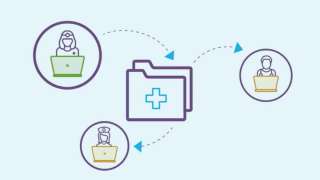
Managing access to your health information
 Play Watch Video
To block or unblock access to your records in the electronic health record contact one of the following organizations for:
Clinical and diagnostic imaging reports contained in the EHR
Ontario Health - Privacy Office
500 - 525 University Ave
Toronto, ON
M5G 2L3
Tel: 1-866-250-1554
Or, complete our EHR Consent Directive Request Form.
You can submit your completed EHR Consent Directive Request From and any attachments, if required, at https://consentform.ontariohealth.ca. You may also mail or fax your form using the instructions on the EHR Consent Directive Request Form.
Lab test results
ServiceOntario INFOline
Hours of operation: Monday to Friday, 8:30 a.m. - 5:00 p.m.
Toll free : 1-800-291-1405
Toronto TTY: 416-327-4282
TTY : 1-800-387-5559
Drug and Pharmacy Service Information
ServiceOntario INFOline
Hours of operation: Monday to Friday, 8:30 a.m. - 5:00 p.m.
Toll free : 1-800-291-1405
TTY : 1-800-387-5559
Information contained in the South West Ontario's ClinicalConnect system
ClinicalConnect Program Office
HITS eHealth Office, Hamilton Health Sciences
293 Wellington St. N., Suite 108
Hamilton, ON L8L 8E7
Tel: 905-870-8270 ext. 9
privacy@clinicalconnect.ca
Information not contained in your electronic health record
Contact the health care professional with whom you have a current care relationship (e.g. family physician).
Contact us anytime at 1-866-250-1554 or servicedesk@ehealthontario.on.ca:
- If you don’t want to share information with any or all of your health care providers
- To receive copies of your information
- To request a correction to your information
- For any privacy and security questions or requests
- For technical support to submit your completed EHR Consent Directive Request Form online.